Culinary
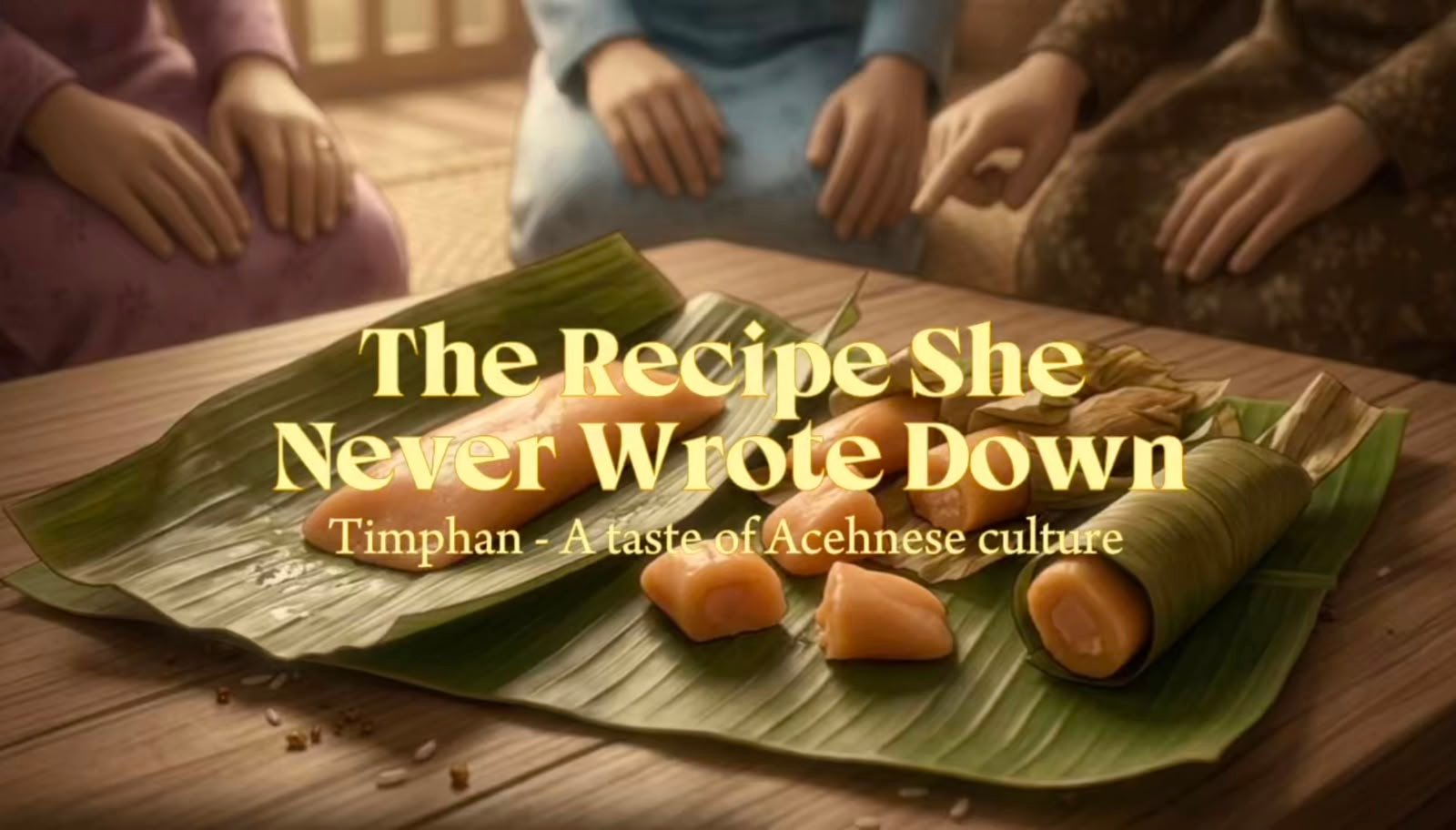
The Recipe She Never Wrote Down (Timphan - A Taste of Acehnese Culture)
F
By Fediya
14 September 2026
Characters
Nisa
Maya
Nek Cut
Setting
The story takes place in a traditional Acehnese house surrounded by lush green landscapes in Aceh, moving inside Nek Cut’s warm, traditional kitchen. The atmosphere is nostalgic and cultural, filled with traditional cooking utensils, banana leaves, and a steamer.
Conflict
The story features both a playful external conflict and a deeper thematic one. Externally, Maya struggles with the physical cooking process, ruining the dough texture and adding too much filling, which leads to lighthearted lessons from Nek Cut. Internally, the narrative centers on the tension between written documentation and oral tradition: Nisa and Maya expect a written recipe for their project, but Nek Cut explains that without hands-on learning, traditional heritage risks becoming nothing more than a forgotten memory.
Ending
The story ends on a warm, reflective note as the three women wrap, steam, and share the fresh Timphan together. After Maya jokingly pretends the food is just average before declaring it amazing, the narrator highlights that Timphan is far more than a traditional cake. It serves as a living connection between generations, showing that cultural heritage survives through shared practice, memory, and personal connection rather than words on paper.
Reflection
"he Recipe She Never Wrote Down reminds us that the most valuable parts of our heritage rarely live in books or digital guides; they live in people, relationships, and shared moments. Through the humble process of making Timphan, Nek Cut passes down far more than a list of ingredients. She teaches Nisa and Maya that culture is a living, breathing practice that requires active participation, patience, and even the freedom to make mistakes.
This story gently challenges our modern instinct to document and categorize everything. While writing things down preserves information, true tradition is kept alive only when it is felt, practiced, and passed from one pair of hands to another. In a fast-changing world, holding onto these unwritten recipes—whether in cooking, storytelling, or craftsmanship—is how we keep our roots, memories, and connections across generations alive."